Safety Instrumented System (SIS)
What is Safety Instrumented System (SIS)?
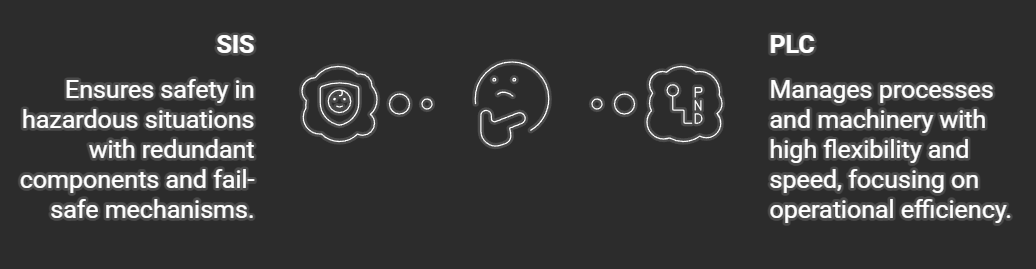
A Safety Instrumented System (SIS) is an independent control layer that executes Safety Instrumented Functions (SIFs) to bring an industrial process to a safe state when dangerous conditions are detected, designed and verified to a target SIL.
Examples
- A refinery’s Emergency Shutdown (ESD) system detects high pressure and commands rapid valve closures to isolate a unit.
- A burner management system trips fuel on flame failure to prevent an explosion.
Discover 🔎
A Safety Instrumented System is the last automated line of defense when normal control fails or hazards develop. It monitors critical parameters through independent sensors, evaluates logic against a Safety Requirements Specification (SRS), and executes final elements (valves, breakers) to achieve or maintain a safe state. SIS must be functionally independent from the Basic Process Control System (BPCS) to ensure that a control fault cannot defeat safety.
Summary 📝
A SIS provides quantified risk reduction by executing well-specified SIFs with proven hardware, redundancy, diagnostics, and disciplined operations. Independence from the BPCS, rigorous lifecycle management, controlled bypasses, and on-schedule proof testing are essential to sustain the target SIL and prevent hazardous events.
Tip: The interactive version includes progress tracking, decks, and premium deep dives.